Keynote Speaker I:
"Title:Towards Oblique Detonation Initiation and Control: Effects of Incoming Boundary Layer and Local Energy Deposition"
Abstract
This seminar will highlight two recent achievements in our research group regarding oblique detonation wave (ODW) initiation. First, we report on the influence of incoming boundary layer on the initiation characteristics of ODWs. This investigation, conducted with the in-house massively parallel block-structured finite volume solver PHAROS integrated with detailed chemistry, highlights the markedly different responses of abrupt and smooth ODWs to the presence of an incoming boundary layer and elucidates the underlying formation mechanisms. For ODWs induced by finite-length ramps, a unified initiation criterion is proposed that considers the free-stream Mach number, the dimensionless boundary-layer thickness, and the dimensionless ramp length. Building upon the above results, a concave-surface strategy for the active control of boundary layer separation induced by the ODW is proposed. Numerical results reveal the existence of an optimal curvature radius for the concave surface: this optimum markedly suppresses boundary-layer separation while simultaneously exploiting the thermal boundary layer to shorten the detonation initiation length. Second, we introduce, for the first time, an energy-deposition-assisted method for initiating ODWs on finite-length ramps at low Mach numbers. Numerical simulations are employed to investigate the localized gas heating effects inherent in the mimicked plasma-assisted initiation, with particular emphasis on the influence of deposition regimes (continuous versus pulsatile) and magnitudes (deposition power and single pulse energy) on ODW initiation characteristics. The results demonstrate that both continuous and pulsatile energy deposition can effectively facilitate on-wedge ODW initiation. As the deposition power or the pulse energy progressively increases, several modes emerge sequentially on the finite wedge, namely, failed initiation, various delayed initiation modes, and various direct initiation modes. By analyzing the spatiotemporal evolution of the key wave structure under single-pulse deposition, a critical pulse-repetition frequency required for sustained on-wedge ODW initiation has been obtained. This prediction is subsequently validated by employing multi-pulse regimes. When both deposition energy and pulse repetition frequency are taken into account, the minimum mean power required for pulsatile energy deposition is found to be approximately one order of magnitude lower than that for continuous one. We warmly invite experts and scholars to join us for a stimulating discussion.
Bio-Sketch
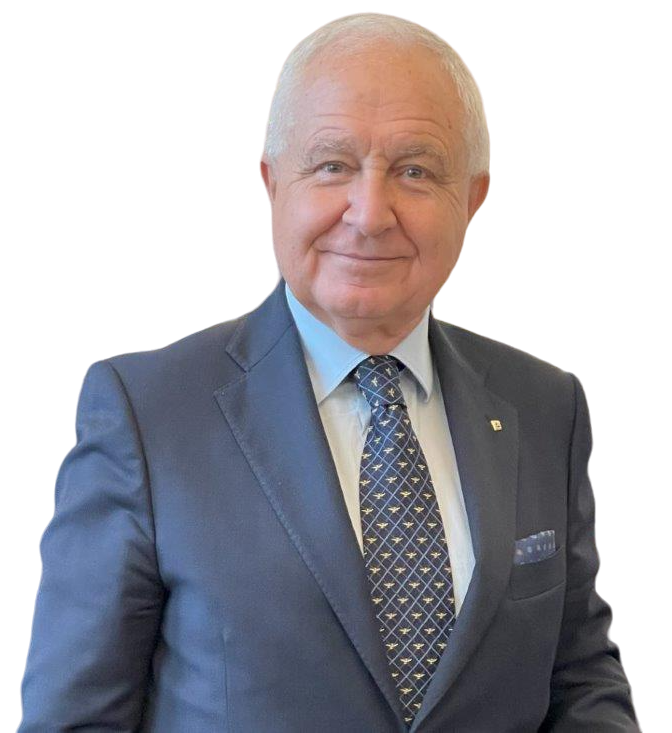
Professor Chih-Yung Wen received his Bachelor of Science degree in Mechanical Engineering from National Taiwan University in 1986. He subsequently earned his Master of Science and Doctor of Philosophy degrees in Aeronautics from the California Institute of Technology (Caltech), USA, in 1989 and 1994, respectively. He commenced his academic career at the Department of Mechanical Engineering, Da-Yeh University, where he was promoted to full Professor in 2002. During his tenure at Da-Yeh University, he held several key administrative positions, including Chairman of the Department of Mechanical and Vehicle Engineering and Provost.
In 2006, Professor Wen joined the Department of Aeronautics and Astronautics at National Cheng Kung University. In 2012, he was appointed Professor in the Department of Mechanical Engineering at The Hong Kong Polytechnic University. From 2019 to 2025, he served as Interim Head and subsequently Head of the Department of Aeronautical and Aviation Engineering. He currently holds the position of Chair Professor of Aeronautical Engineering and serves as Director of the Research Institute of Large Aircraft, Director of the Research Center of Uncrewed Autonomous Systems, and Associate Director of the Research Institute for Sports Science and Technology.
Professor Wen has authored or co-authored more than 300 scientific publications, including journal articles, conference proceedings, and book chapters, and is the holder of 14 patents. He is a Fellow of the American Society of Mechanical Engineers (ASME), the Royal Aeronautical Society (RAeS), and the Hong Kong Institution of Engineers (HKIE), as well as an Associate Fellow of the American Institute of Aeronautics and Astronautics (AIAA). Professor Wen is actively involved in professional and academic activities in the fields of Mechanical and Aerospace Engineering at both national and international levels and serves on several prominent professional boards and committees related to Aerospace Engineering.
Chih-Yung Wen
Professor of The Hong Kong Polytechnic University, Hong Kong, China
(Head of AAE, PolyU, HKIE Fellow and AIAA Associate Fellow)
Keynote Speaker II:
"Title: Key Technologies and Applications for Ultra-Precision and Ultra-Stability Control of Spacecraft Payloads"
Abstract
Spacecraft payloads are the core components of space missions, and their technological sophistication has emerged as a pivotal strategic asset in the realm of civil-military integration and a critical arena in global space competition. New-generation high-value payloads exhibit characteristics such as multi-scale features, variable stiffness, and cross-generational performance. These features pose significant challenges, including dynamic modeling errors, multi-source disturbance suppression, and control instability under extreme operating conditions. This presentation first outlines the ultra-precision and ultra-stability control requirements for complex spacecraft payloads; then categorizes and analyzes the functions of typical payload systems; subsequently focuses on establishing an ultra-precision and ultra-stable control framework, dissects the dynamic behaviors of rigid (e.g., optical clocks), flexible (e.g., antennas), and ultra-flexible (e.g., tethered systems) payloads in detail, and proposes a collaborative innovation approach integrating “modeling–control–actuation”. Finally, the application of these technologies in projects such as the Mengtian experimental module of the Chinese space station and the “Xihe” experimental satellite is presented. These research efforts have overcome key technical bottlenecks in spacecraft payload control under complex environmental conditions, providing critical technical support for China’s pursuit of leadership in space exploration, with promising broad application prospects and significant societal benefits.
Bio-Sketch
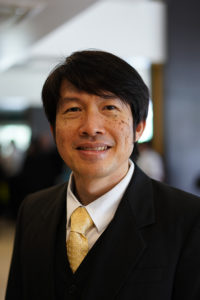
Fan Zhang is a professor and doctoral supervisor at the School of Astronautics, Northwestern Polytechnical University, and an awardee of the National Science Fund for Distinguished Young Scholars. Her research focuses on intelligent control in rigid-flexible coupled systems. She holds active membership in several prestigious academic organizations, including the Chinese Association of Automation, the Chinese Society of Aeronautics and Astronautics, and the Chinese Society of Space Science. She was invited to join the Space Tether Technology Committee of the American Institute of Aeronautics and Astronautics (AIAA), reflecting international recognition of his expertise. Professor Zhang has led or participated in more than 10 national-level research projects funded by the National Natural Science Foundation of China and the Military Science and Technology Commission. She has published over 70 papers in top-tier international journals, Chinese academic journals, and major field-specific conferences, with 6 recognized as ESI Highly Cited Papers. She is the author of three monographs published by National Defense Industry Press, Springer, and Elsevier. She holds over 50 authorized invention patents and has been awarded two First-Class and one Second-Class Provincial/Ministerial Scientific and Technological Progress Awards.
Fan Zhang
Professor of Northwestern Polytechnical University, China
Keynote Speaker III:
"Title: Modelling of Complex Particle-Fluid System with Solid Damage "
Abstract
Complex particle-fluid flow is ubiquitous in nature and industries, in which "kinematics of particles or granular materials" is one of the 125 most challenging scientific issues in the first quarter of 21th centry [Science, 2005]. Recently, it has been proved that a combined approach of Computational Fluid Dynamics and Discrete Element Method (DEM) (CFD-DEM) is an effective approach to study the fundamentals of particle-fluid systems. This work shows how a CFD-DEM model can be developed and generally used to study various complex, three dimensional and large-scale particle-fluid systems. Especially, it shows how a coarse-grained (CG) CFD-DEM approach can be developed and used to significantly reduce the computaitonal cost of DEM simulations. It also shows that the DEM with bonded particle model can model elastoplastic behaviour of solid, soil erosion, cutting of solids and propollent combustion. The work includes model development, model validation, model study, data analysis, process innovation, and development of process simulator. It also includes the study of particle-fluid systems with bonded particles and chemical reactions.
Bio-Sketch
Dr Kaiwei (Kevin) Chu is currently a Distinguished Professor at Shandong University of China. He is specialized in the modelling and simulation of complex particle-fluid flows that are widely found in nature and many industries including energy, chemical, mineral, metallurgical, material, environmental and pharmaceutical. He has carried out extensive work to elucidate the fundamentals of complex particle-fluid flows (including bonded particles, heat transfer and chemical reaction) by using combined approach of computational fluid dynamics and discrete element method (CFD-DEM), leading to 80+ publications (including 3 first-authored “Most Cited Articles” and 7 first-authored “Top25 Hottest Articles) and 10+ industrial reports, with total citations of 4776 and H-index of 31 (as at 3 Nov. 2024 via Google Scholar). He obtained his PhD degree from The University of New South Wales of Australia in 2010.
Kaiwei Chu
Professor of Shandong University, China
Copyright © 2025 The 16th Asia Conference on Mechanical and Aerospace Engineering